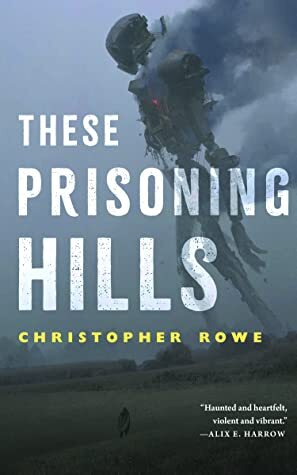
This week, Jonathan and Gary are joined by the brilliant Christopher Rowe, whose novella These Prisoning Hills appears next week from Tordotcom, revisiting the wonderful and bizarre world first introduced in his earlier stories “The Voluntary State” and “The Border State.”
We cover quite a bit of territory, ranging from Christopher’s own influences, what it means to be associated with a particular region (such as Kentucky and Tennessee in Christopher’s case), the nature of influence in SF, and Christopher’s own discovery of the work of Cordwainer Smith, whose stories he’s been assiduously collecting in their original magazine appearances.
As usual, we would like to thank Christopher for taking the time to talk to us, and we hope you enjoy the podcast.
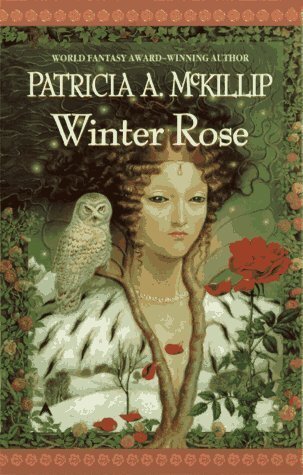
Earlier this week, we were all stunned by the news of the tragic death of World Fantasy Life Achievement Award winner Patricia McKillip, whose luminous works have influenced and moved generations of readers and writers for nearly half a century.
Jonathan and Gary are joined by McKillip’s longtime friend, Ellen Kushner, herself a winner of World Fantasy, Locus, and Mythopoeic Awards, and by Campbell Award winner E. Lily Yu, We talk some about Pat’s personal modesty and sharp wit, but mostly about her astonishing body of work, not only in fantasy but (as Lily points out) in her less familiar forays into SF. Like all tributes, it’s probably inadequate to the work, but it’s deeply felt by all of us.
This week’s discussion begins with Gary wondering about what he tentatively calls the use of absurdism in some recent novels, mentioning Kelly Barnhill’s When Women Were Dragons and Sunyi Dean’s forthcoming The Book Eaters, each of which features a powerful central metaphor that refuses to resolve itself into traditional SF or fantasy systems—somewhat like the old Theatre of the Absurd playwrights like Ionesco.
This leads to yet another discussion of what may be happening with the notion of genres, and how an earlier generation of gatekeeping editors has given way to editors more welcoming to a variety of voices and approaches. We more or less conclude that, while this reinvigorates the traditional genres, there are plenty of options for readers who still prefer the familiar formulas and traditions. Finally, we talk a bit about getting together for a possible live podcast at Chicon 8 later this summer.
It’s only been a week since Jonathan and Gary sat down to chat with Nicola Griffith about her new book, Spear, but in a bid to get back on schedule, they took a moment to record a new episode for the coming long weekend.
They kick off chatting about travel during the pandemic and the coming WorldCon, before Jonathan admits he’s only just read Ursula K. Le Guin’s A Wizard of Earthsea, and then they go on to talk about Le Guin’s work, the oddities of book buying and collecting, and then our hosts attempt to answer the age-old questions: do you need to read a book? if so, why? do you need to keep book? which ones can you get rid of, and how? Really, it’s a ramble that kicks off with Earthsea and ends up chatting about books. It’s a Coode Street podcast.
As always, our thanks for your patience with our rambles. We hope you enjoy the episode, and see you again pretty soon!
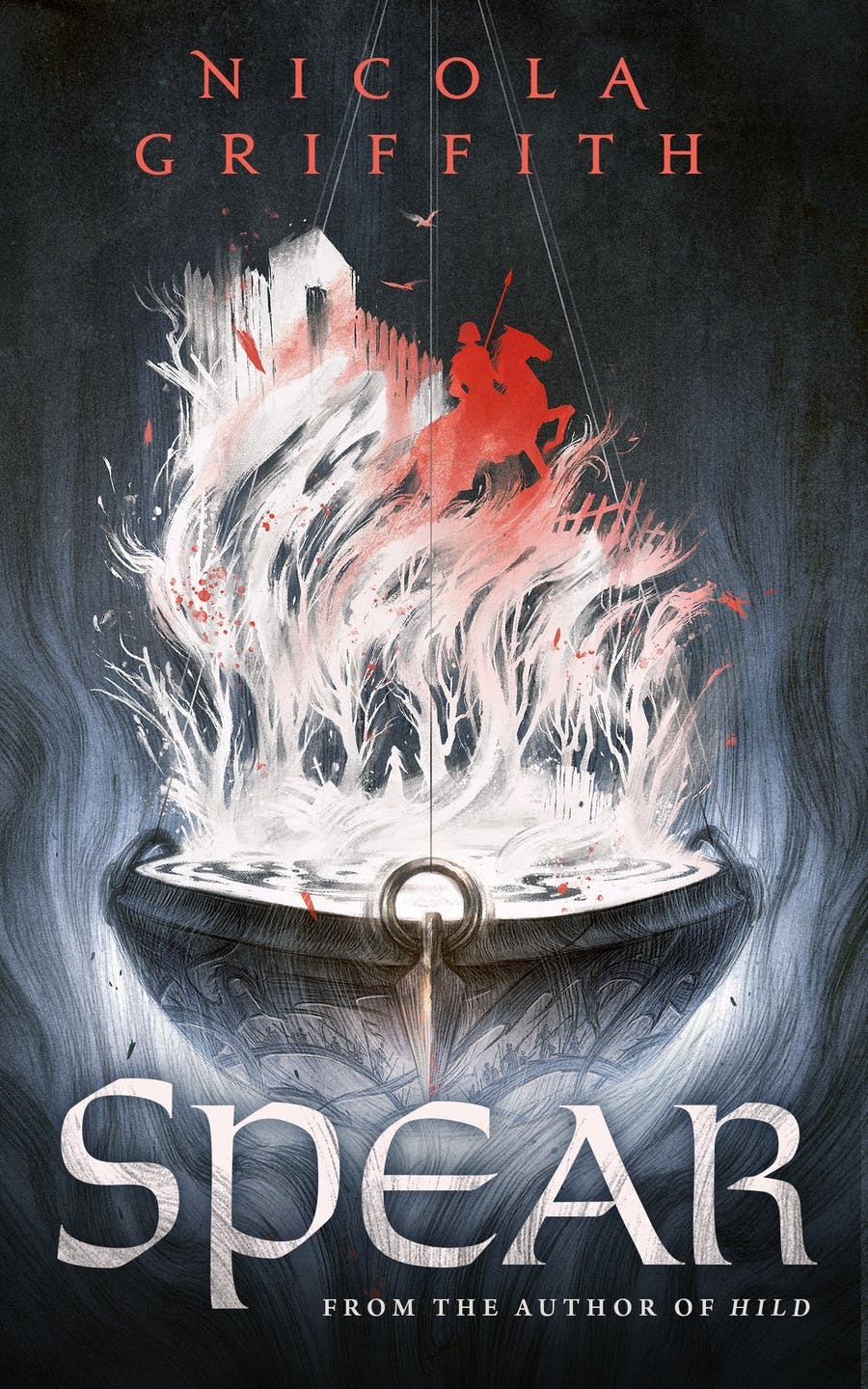
This time out, Jonathan and Gary are joined by the brilliant Nicola Griffith, whose Spear, out this month, revisits Arthurian tales from an entirely new perspective. We chat about how the novel came about, Arthurian literature as fan fiction, the wonderful illustrations by Rovina Cai, and what it was like to record the audiobook. We also discuss its similarities to and differences from her well-received historical novel Hild and its forthcoming sequel Menewood, as well as Nicola’s classic early novels Ammonite and Slow River, her recent So Lucky, and forthcoming reissues of her Aud Torvingen novels, beginning with The Blue Place.