
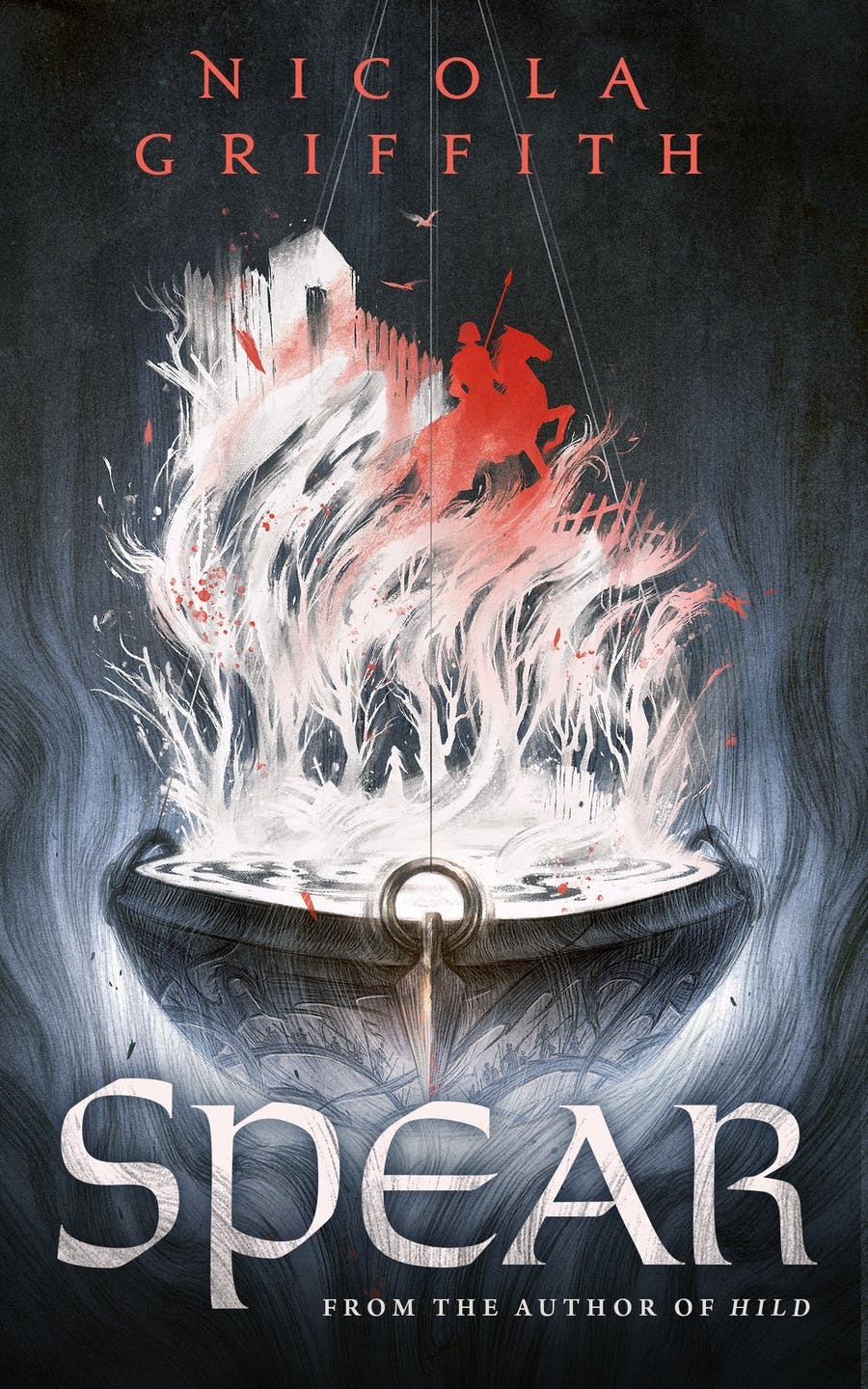
 This time out, Jonathan and Gary are joined by the brilliant Nicola Griffith, whose Spear, out this month, revisits Arthurian tales from an entirely new perspective. We chat about how the novel came about, Arthurian literature as fan fiction, the wonderful illustrations by Rovina Cai, and what it was like to record the audiobook. We also discuss its similarities to and differences from her well-received historical novel Hild and its forthcoming sequel Menewood, as well as Nicola’s classic early novels Ammonite and Slow River, her recent So Lucky, and forthcoming reissues of her Aud Torvingen novels, beginning with The Blue Place.
Episode 575: New books, old readers, and such
With Gary just back from ICFA in Florida, he discussed whether this will really be the year of re-emergence, with both the World Science Fiction Convention in Chicago and World Fantasy Convention in New Orleans in the offing. This led, as it does, to discussion of the Hugos, whether small categories with few nominations should be dropped, whether other categories should be added, and whether major historical studies such as Mike Ashley’s five-volume The History of the Science-Fiction Magazines really have a chance of being seen because of availability issues, as compared to the increasingly broad definition of “related work.”
Inevitably, we chatted about new or forthcoming books we’re excited about. We both liked Guy Gavriel Kay’s All the Seas of the World, Alix E. Harrow’s A Mirror Mended, and Christopher Rowe’s These Prisoning Hills, while Jonathan is tempted by Karen Joy Fowler’s new novel Booth and Gary’s about to start Samit Basu’s The City Inside.
Of course, there are lots of digressions in between, including the nature of historical fiction and nostalgia for printed books in the age of e-books (at least for reviewers and critics).
Open submission period for The Book of Witches – Closed
This is just to confirm that the open submission period for The Book of Witches closed at 5.00 pm today, Western Australian time. Thank you to everyone who submitted. Unfortunately, any submissions arriving after 5.00 pm cannot be considered.
Episode 574: Kickstarters, communities, and more
After reminding listeners that the deadline for Hugo nominations is fast approaching on March 15 (and reminding them once again of the eligibility of this podcast for Best Fancast and of Jonathan for Best Editor, Short Form), we move on to the much-discussed, record-setting Brandon Sanderson Kickstarter, and the question of whether it really matters to anyone other than Sanderson and his readers. Acknowledging that Sanderson readers are fully likely to get exactly what they are expecting, this led us into a brief discussion of reader expectations, also the topic of a recent essay by Molly Templeton on Tor.com. While occasionally we come across a book with almost no prior knowledge or publicity, most books come with expectations based on the author’s previous work, or even the publisher’s reputation.
Some of the authors discussed here, and some that Jonathan and Gary are currently reading or expecting to read, include Guy Gavriel Kay, R.F. Kuang, Kelly Barnhill, Nghi Vo, John Crowley, and Karen Joy Fowler. At the end, we touch briefly upon the question of history in fiction, and the different strategies of using entirely fictional characters, almost entirely historical figures, or a mixture of both.
Episode 573: The 2021 Locus Recommended Reading List
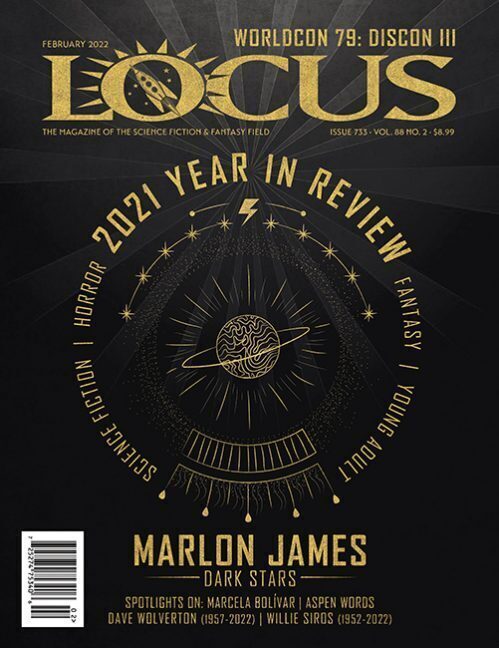 This week, in our more-or-less annual discussion of the Locus Recommended Reading List, we are delighted to be joined by Locus Editor-in-Chief Liza Groen Trombi.
We talk about the purpose of the list, how it has changed over the years, how books or stories get on the list, and a few thorny questions about how to decide whether a novel is SF or fantasy if it contains substantial elements of both. In addition to mentioning some of our own favourite works of the year, we touch upon the importance of the First Novels list, which might be a harbinger of what’s to come, and how story collections and YA novels have grown in importance over the years.
Toward the end, we pay a brief tribute to two Locus Magazine pioneers, reviewer Faren Miller (who was also the magazine’s first full-time employee), and bibliographer William G. Contento, who helped establish resources that remain crucial to anyone interested in the SFF field.