For the handful of listeners who might be nostalgic for those earlier Coode Streets which were mostly just disorganized rambles, this week we return to form—or lack of form, as the case may be.
We do mention Rich Horton’s recent re-reads of pre-Hugo SF classics, and his contention that 1953 was a high point in SF publishing, but then get into questions of why it was just an impressive year (partly due to a backlog of SF writing that hadn’t previously been widely available in book form), which in turn leads us to another discussion of the familiar periods of SF history still make much sense given the broadening of the field in the last half-century. Are there other Golden Ages? Are we in one now? How do today’s readers decide which earlier SF is worth reading? Is the overall quality of SF stronger today than ever, or are we simply applying different or more stringently literary standards? This leads to a digression about exciting books coming out later this year, and a number of other topics that we challenge you to even try to keep track of. But at least we had fun.
This week we’re joined by the distinguished, multiple award-winning John Kessel, whose collection The Dark Ride: The Best Short Fiction of John Kessel is recently out from Subterranean Press, representing John’s four-decade career as an SF writer, teacher, editor, scholar, and workshop leader. We touch upon not only his short fiction, but novels like The Moon and the Other and Pride and Prometheus, his early studies under James Gunn, his thematic anthologies co-edited with James Patrick Kelly, and what really happened in SF during the 1980s.
As always, we’d like to thank John for taking the time to talk to us and hope you’ll enjoy the episode.
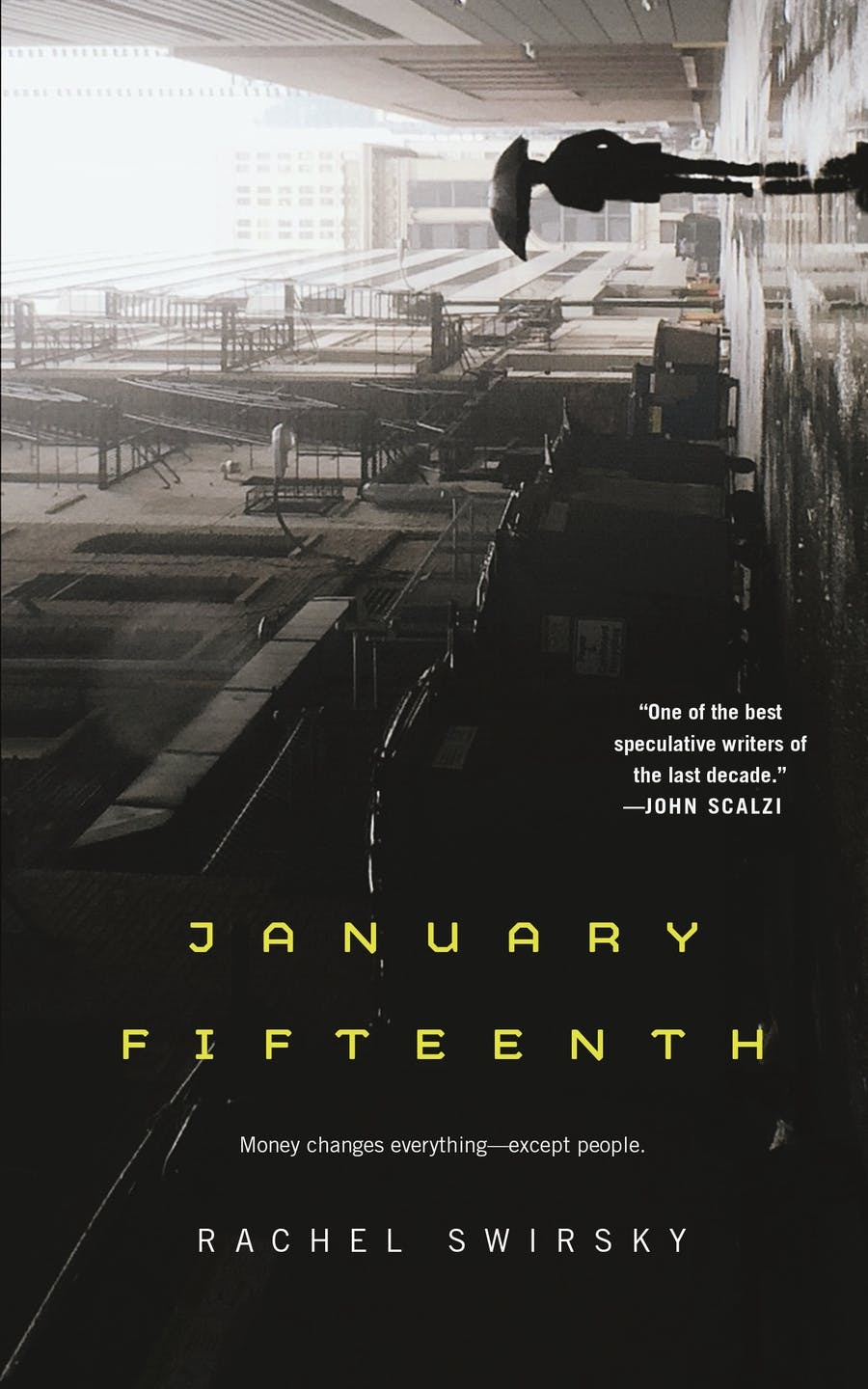
For the first week in July, we’re joined by Nebula Award winner Rachel Swirsky, whose novella January Fifteenth ( just out from Tordotcom) is a provocative exploration of the idea of Universal Basic Income (UBI) as it might play out in the lives of four women in very different circumstances. We touch upon Rachel’s decision to focus on characters rather than systems, to set the tale in a recognizable near future, and to deliberately restrain from many science-fictional bells and whistles.
This leads to how SF deals, too rarely, with questions of economic policy and the effects on individual lives —in the case of January Fifteenth, a woman escaping from an abusive ex-spouse, a journalist covering the effects of UBI, a well-off college student whose friends deliberately waste their annual checks, and a young member of a repressive religious cult. As usual, we touch upon what’s next for Rachel, including an intriguing collaboration with Ann Leckie.
As always, our thanks to Rachel for making the time to talk to us. We hope you enjoy the episode!
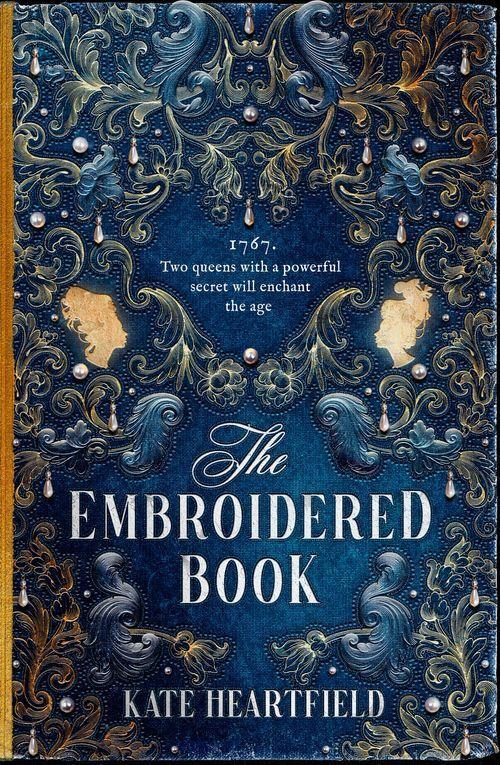
This week, Jonathan and Gary are delighted to chat with Kate Heartfield, whose thoroughly engrossing historical fantasy The Embroidered Book, already a bestseller in the UK and Canada, has just been published in the United States.
We talk about the research that went into her fascinating tale of the sisters Antoine and Charlotte, who grew up to become Marie Antoinette and Queen Charlotte of Naples, and of how magical books of spells secretly helped shape the history of 18th century Europe. We touch upon her earlier Aurora-winning Armed in Her Fashion, the various ways of incorporating fantasy into history, the question of whether historical fiction might be received differently in different cultures and markets, and some hints about her current work in progress.
It’s a pretty lively discussion, and we think a lot of fun. As always, our thanks to Kate for making time to talk to us, and we hope you enjoy the episode!
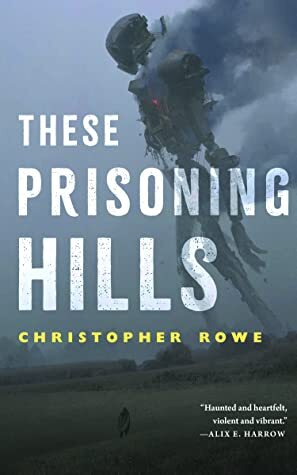
This week, Jonathan and Gary are joined by the brilliant Christopher Rowe, whose novella These Prisoning Hills appears next week from Tordotcom, revisiting the wonderful and bizarre world first introduced in his earlier stories “The Voluntary State” and “The Border State.”
We cover quite a bit of territory, ranging from Christopher’s own influences, what it means to be associated with a particular region (such as Kentucky and Tennessee in Christopher’s case), the nature of influence in SF, and Christopher’s own discovery of the work of Cordwainer Smith, whose stories he’s been assiduously collecting in their original magazine appearances.
As usual, we would like to thank Christopher for taking the time to talk to us, and we hope you enjoy the podcast.