With Gary about to leave for the World Fantasy Convention to be held in New Orleans next week, and with Jonathan in the process of assembling anthologies on the most recent iterations of space opera, we spend most of our time discussing the characteristics, history, and too-common misuse of that venerable term.
While we do touch briefly on the etymology of ‘space opera’, and on the pulp-era adventures that Wilson Tucker had in mind when he rather contemptuously coined the term in 1941, most of the discussion focuses on how the idea has evolved since M. John Harrison set out to demolish the old-school space opera with The Centauri Device in 1974, the efforts of Paul J. McAuley and others to define a new space opera in the 1980s (and Jonathan and Gardner Dozois’s The New Space Opera anthologies of 2007 and 2010), the influence of media, and more recent examples ranging from James S.A. Corey’s Expanse series to Aliette de Bodard’s Xuya universe, Nnedi Okorafor’s Binti series, and other authors who have energetically begun to reclaim space opera for a more diverse cast of characters. We fully expect enthusiastic disagreements.
As always, we hope you enjoy the episode. See you all again after World Fantasy!
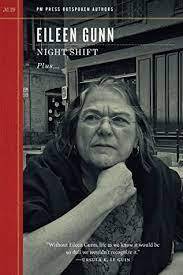
This week Jonathan and Gary are joined by the wonderful Eileen Gunn, whose Night Shift Plus… is the latest volume in PM Press’s ongoing series of “Outspoken Authors” collections, which combine fiction and nonfiction with an author interview by series editor Terry Bisson.
We discuss Eileen’s stories, her essays on Ursula K. Le Guin, Carol Emshwiller, and Gardner Dozois (and her essay on William Gibson’s Neuromancer that she could not include in the collection), her earlier collections Stable Strategies and Questionable Practices, the early days of the online zine Infinite Matrix and what it was like in the early days of Microsoft, her wide range of connections in the SF world, and her fascinating novel in progress. As usual, there are digressions, but they’re pretty interesting, too.
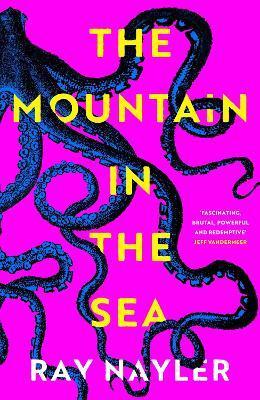
With the fall season of Coode Street underway, Jonathan and Gary sit down with the brilliant Ray Nayler, whose first novel The Mountain in the Sea has just been published. We touch upon the many themes of the novel, from the problems of alien communication to artificial intelligence, the nature of consciousness, the ethics of science, and corporate malfeasance—not to mention lots of octopuses.
We also chat about his eclectic reading habits, from his early passion for Shakespeare to allusions in his novel as varied as Mary Shelley and Jack London. He also discusses his relationship to genre and how his reading and writing fit into the considerable demands of his professional career.
Last Tuesday I arrived at Perth Airport, ‘fresh’ from a really enjoyable trip to the United States. During the two weeks I spent in Chicago and San Francisco, I got the chance to renew old friendships and make new ones. I got to enjoy Chicon 8, to see a bit more of Chicago, and basically to remind myself, after three years at home, what it is to be away. It was a special joy to spend time with Ellen and Gary. I wasn’t in the best of health in San Francisco — something hit me hard that had me wheezing and coughing — but I feel like I’m slowly rebounding. I also got some new sekrit news (which is always fun to have).
I’m still spinning my wheels, as I have been all year, but I’m determined that this week will see me actually write new book proposals, keep my promises to people on book-related stuff, and maybe even make some time to work on my taxes. First, though, something also long overdue. This morning Marianne and I are driving down to Yallingup for a quick two-night stay. It’s Marianne’s first time out of town since before the first lockdown in 2020 and it’s our first time away as a couple since 2014 (and only the fourth time since 2000). A good chance to reconnect. The plan is to simply relax, so I’ll be mostly offline, I think, while away.
After far too many weeks of an unscheduled summer hiatus, Jonathan and Gary are back with a discussion of the recent Worldcon, which felt in many ways like a return to classic Worldcon form. But then we amble into a discussion that ranges from whether there are too many awards in SF to the question of whether “hard SF” is still a viable category that means what it once did—”playing with the net up”–and how the multiverse seems to have joined time travel and even moon colonies as narrative devices which has more or less escaped the rigours of SF to become features of mainstream novels and media franchises. Also, as always, a bit about who and what we’ve been reading.